
White Orphan Syndrome
I often hear white folks in America say things like, “I don’t really have a culture”—which, unfortunately, I have heard many times. My answer to that, as a person of color, is generally: yes, yes you do—it’s our entire culture. But the ubiquitous nature of white culture as just ‘the norm’ of our country is designed, as white privilege and institutionalized racism are, to be invisible to those who benefit from it, as Peggy Mackintosh so eloquently lays out in her awakening-to-racism classic, ‘Unpacking the Invisible Knapsack’. Those of us who have to learn the cultural norms of white folks, and perform them perfectly are keenly aware of the intricately embedded cultural realities that are invisible to most white people.
But what I really hear white folks saying is that they don’t feel like they have what I call a ‘living culture’, and what they mean is that they don’t feel connected to a sense of livingness, meaning, magic, or purpose in modern America. And let’s be honest, no one wants to claim patriarchy, capitalism, racism, and histories of genocide as their ‘culture’. (But, yes, white folks, it is.)
In my experience, this perceived sense of lack, paired with a feeling of total rootlessness is what generally leads white people to reach for and appropriate the cultures of those they feel still have a ‘livingness’, which, not surprisingly, are the very same cultures of people of color their ancestors attempted to (and often succeeded at) dismembering. I call this particular phenomenon “White Orphan Syndrome”, with thanks to Giles Charle, who suggested the concept.
I think of white orphan syndrome like this: you hear some interesting folks talking about a potluck, and because it sounds good, you decide to show up uninvited. When you do, there’s a beautiful table laid out, so many “exotic” dishes with different flavors and ingredients you’ve never seen before, and poor little orphan, you haven’t eaten in days. You don’t bring a dish to share, you just push past everyone, grab a plate, and start gobbling down everything around you like a rabid street dog, because you’re just so starving and it’s all so delicious, as everyone else watches you in slight horror. You don’t even realize that, though, until someone whispers, “Um, hey, can you not eat all that vegan dish, that’s all some people have here,” and you look up with food on your face, to a ring of hostile and horrified faces, and defensively say in your bewilderment, “Why? Why can’t I eat whatever I want, as much as I want?” Let that food-on-the-face faux pax burn into your mind as the image of cultural appropriation.
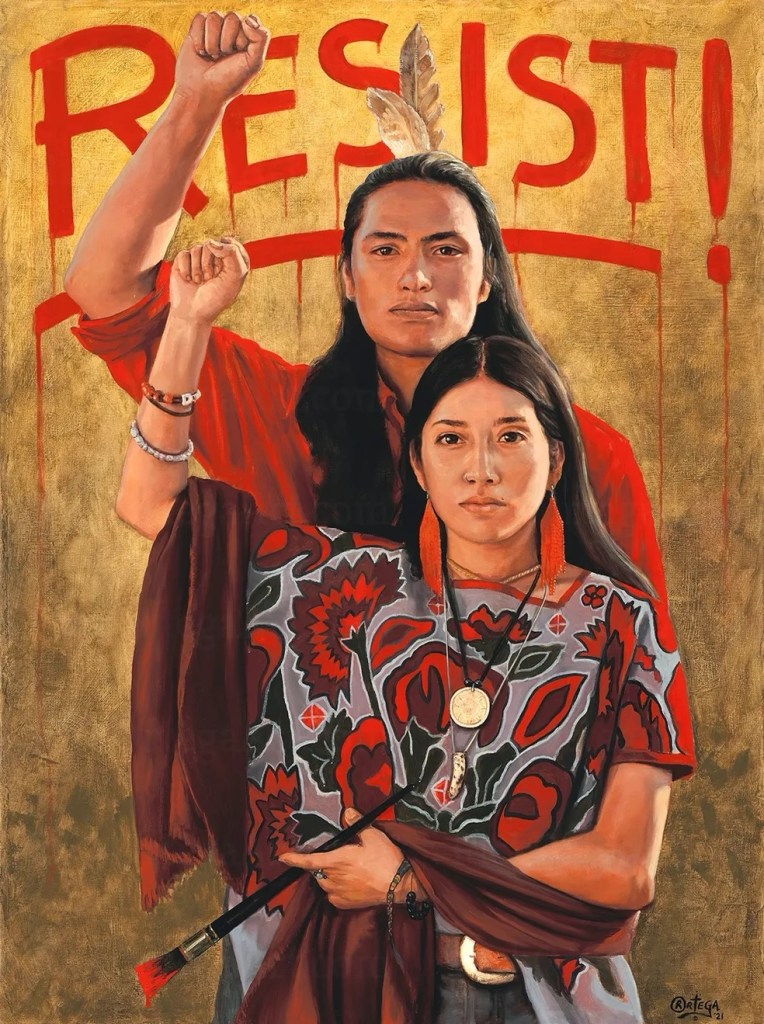
I use the potluck metaphor with white liberals, because most of ya’ll have been to a potluck or two in your day, and can cringe in understanding of the breaches of potluck etiquette. I also use it because the potluck, in itself, is a culturally misappropriated gathering named after the Chinook word ‘potlatch’, a Northwest Indian tradition of the Tlingit, Haida, and other tribes that meant something quite different. The legacy of colonization is the concept that you can take whatever you see, if you want it, without having to think about what it truly is, or who else it may be taking away from. Indigenous and tribal cultures are generally reciprocal-based, whereas white European cultures were based on taking without giving as much in return—that’s capitalism. If you can take without giving anything in return, that’s colonization.
Cultural Appropriation vs. Cultural Appreciation
When white folks come to the table with their own potluck dish, so to speak, when you show up well-nourished and fed on your own cultural and ancestral traditions, then there can be a balanced sharing—that’s cultural appreciation. First of all, you would need to ask if you could come to the table, and then wait to be invited. If you bring a delicious cabbage borscht because you’re Russian, and you’re not super hungry because you were tasting it before you arrived, and you can share with me why your ancestors would have made this and how—then you have something to offer. And because you’re not starving, you can actually pay attention to and savor the new and different ingredients and spices in the other dishes, and can really listen to and learn what they are and why they’re important to someone else’s culture. And if you arrive generally nourished, then you can be thoughtful about the etiquette of the potluck, and not take more than your share, while making sure the dish you brought can replenish what you took. This is what cultural appreciation looks like. But you have to be able to appreciate your own culture before you can do that for anyone else’s, which is why I’m always encouraging ya’ll to do your own ancestral recovery work.
Because the truth is: even though you might feel like a white orphan, you’re not. And you’re not just “white”—you’re Irish, or Norwegian, you’re French or German, you have roots, maybe across the ocean—and they connect you to the earth and to livingness through your own ancestral ways. And those ancestors are calling you to come home to them, and to bring their magic and power and livingness forward as well. This world needs Celtic wisdom and the magic of Norse runes, it needs Greek Amazons and medieval Italian witchery. The challenge might be that your disconnection from nature, from your original tribal ways happened a lot farther back than it did for some of us. That doesn’t mean it’s lost and you have to just give up and go somewhere else “more exotic” to get it. It doesn’t mean you’re entitled to go rifle through and plunder, like a new cultural colonizer, whatever spiritual gold and resources are still left from the cultures of color your ancestors killed, assimilated, and decimated.
Instead, it’s your job to recover your own deep ancestral culture, and share it with the rest of the world—bring us your awesome potluck dish. Ask if it’s okay to come to the Gathering, instead of feeling entitled to show up. Accept that sometimes, it might not be, and support that space with gratitude that removing yourself is a way to make reparations for the harms of your ancestors, which you are responsible for. Know that sometimes, you have to work to earn an invitation: even if you can’t attend, can you arrive early to help set-up chairs? Come by later to do clean-up afterwards? Ask if there’s a way you can best be of service, and offer what you can. Perhaps you may need to do that for awhile before people begin to trust that your intentions are good, and you’re not planning to just take the good stuff and run as so many others have.
If you are invited, come deeply humble, recognizing it as an honor, and pay attention. Respect that some dishes may belong just to certain groups of people—notice if there are only three vegetarian dishes out of twelve, and leave those for folks for whom that is all they can eat. Listen to the story of those foods, why they’re important, how all the ingredients came to be. This is only something you can begin to understand if you put in the time—a few years at a minimum—before you ask very humbly if you could possibly add that chili powder to your own borscht, and perhaps someone you’ve built relationship with will gift you some.
Even better than that would be you showing an interest in chilis, and then eliciting and listening patiently to stories from elders about them. Learning that there’s like a thousand different kinds, which you didn’t realize, and they all have their different ways of being grown, smoked, dried, or prepared, which you begin to learn. Perhaps someone who has seen your patient interest and the ways you’re being of service to the community gifts you some chili seeds that came from their grandfather, and you work hard to learn how to grow them.
You fail at it for a couple of years before you finally manage to put in the work to get that chili plant to thrive. You harvest your first chilis, manage to preserve and prepare them correctly while you’re receiving teaching and guidance on how to do that, and then gift back most or the best of them to those who spent all those resources of time, energy, and seeds teaching you how to do that, or to the community at large that supports them. Only then when they say, “Let’s see how that borscht tastes with some kick!” would you add that chili to your soup, when you’ve received permission. Not by purchasing or stealing a plastic bottle of chili powder from your largest chain grocery store.
I know this is an extended metaphor, so I want to make sure you’re clear that I’m talking about more than borscht here. If you want to learn Native or indigenous spiritual practices and shamanic ways, this is how you do it. Ask, offer, pay attention, listen, put in the work, give back, receive permission. That’s how you can come and learn about, and even practice Native or tribal ways aside from your own, if they’ve been gifted to you or taught to you by a living indigenous person, and you’re doing it in a good way. This way is based in respect, patience, humility, and sustained effort. That is how we do cultural appreciation instead of cultural appropriation.
-Jai Medina
 Balanzu Way School of Shamanic Arts